


Sustainable packaging for food is now a major priority for brands looking to reduce waste, improve recycling, and respond to changing customer expectations. As the conversation around packaging sustainability continues to grow, food businesses are under increasing pressure to choose materials and formats that protect products while lowering environmental impact.
Sustainability in packaging is no longer just about replacing plastic. It is about designing packs that are durable, efficient to transport, easy to recycle, and suitable for the product they hold. For food brands in particular, sustainable food packaging must balance shelf life, food safety, product protection, and environmental responsibility.
The most effective sustainable packaging for food should protect the product, maintain quality, and minimise unnecessary waste throughout the supply chain. When considering packaging and sustainability together, businesses need to look beyond surface-level claims and assess recyclability, transport weight, durability, and how much material is actually being used. While paper, card and glass are often presented as sustainable alternatives, each comes with its own environmental trade-offs depending on the application.
Why Is Sustainable Food Packaging Important for Packaging Sustainability?
Sustainable food packaging plays an important role in reducing waste, improving recyclability, and helping brands meet wider sustainability goals. For food manufacturers, packaging sustainability is not only about materials, but also about pack efficiency, transport emissions, and end-of-life disposal.
Customers are increasingly looking for environmentally friendly food packaging and eco friendly food packaging that reflects responsible brand values. Choosing the right format can support sustainability and packaging objectives while also strengthening trust, improving product presentation, and reducing unnecessary environmental impact.
How Does Sustainability in Packaging Apply to Food Packaging?
Sustainability in packaging means considering the full life cycle of the pack, from raw material use and manufacturing through to transport, reuse, recycling, or disposal. In food packaging, this is especially important because materials must also meet hygiene, shelf-life, and product protection requirements.
Sustainable packaging does not always mean biodegradable packaging. In many cases, durable and infinitely recyclable materials can offer a stronger long-term solution. The best approach is to choose packaging that supports food safety while helping reduce waste and improve recovery through established recycling systems.
What Are the Best Sustainable Packaging Materials for Food?
Tin and aluminium are strong options for sustainable packaging for food because they combine product protection with long-term recyclability. Unlike single-use materials that quickly become waste, metal packaging can support more effective sustainability packaging strategies by offering durability, reusability, and established recycling value.
Tinplate contains recycled material and forms part of a more circular packaging system rather than relying entirely on virgin resources. It is durable, protects food effectively from store to door, and can often be repurposed by the end user for storage or secondary use.
For brands focused on sustainable food packaging, tinplate also offers practical design advantages. It can be produced in a range of shapes and sizes to suit the product more precisely, helping reduce wasted space and unnecessary material use. It can also be printed using vegetable-based inks and lined with food-safe lacquer, making it suitable for a wide range of food applications.
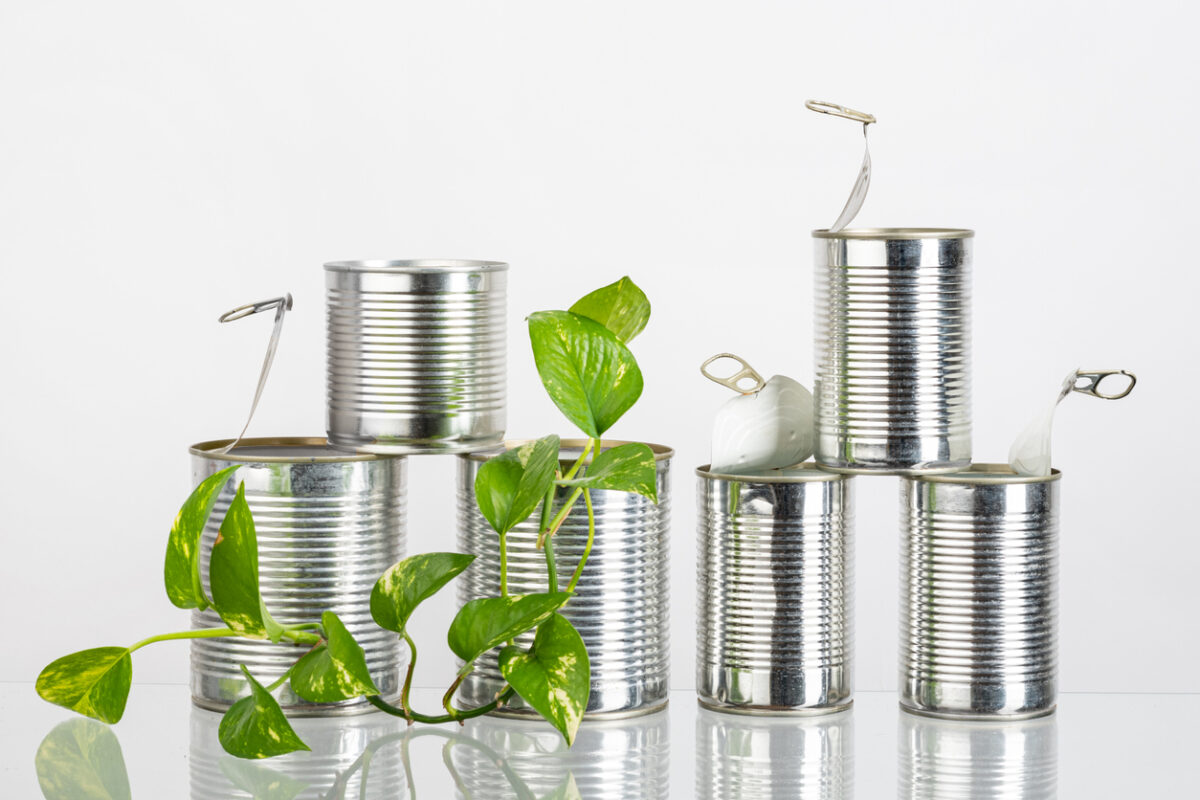
What Makes Food Packaging Environmentally Friendly?
Environmentally friendly food packaging should reduce unnecessary material use, protect the product properly, and fit within a realistic recycling or reuse system. The most effective eco friendly food packaging is not always the lightest or newest option — it is the option that performs well across the whole supply chain and creates less waste over time.
For food brands, this means looking at more than just appearance. Material choice, pack size, transport efficiency, durability, and consumer reuse all contribute to how sustainable the final packaging solution really is.
How Tinplate Supports Sustainable Packaging and Sustainability Goals
Tinplate supports sustainable packaging by combining durability, recyclability, and strong product protection in one format. For brands reviewing packaging and sustainability together, it offers a practical alternative that can help reduce damage, improve shelf impact, and support circular economy goals.
Because tin packaging can be reused, repurposed, and recycled, it aligns well with wider sustainability and packaging strategies for premium and speciality food products.
If you are interested in developing tin or aluminium packaging for food, get in contact with Tinplate and we will be happy to discuss your project in more detail or for more information take a look at our Corporate Social Responsibility page.
Take a look at our packaging trends for 2024 blog.
*Source: CPD Online
